Felix Roth · 3 September 2026
Dome Frameworks Reshaping Water Conservation Strategies Across Arid Zones
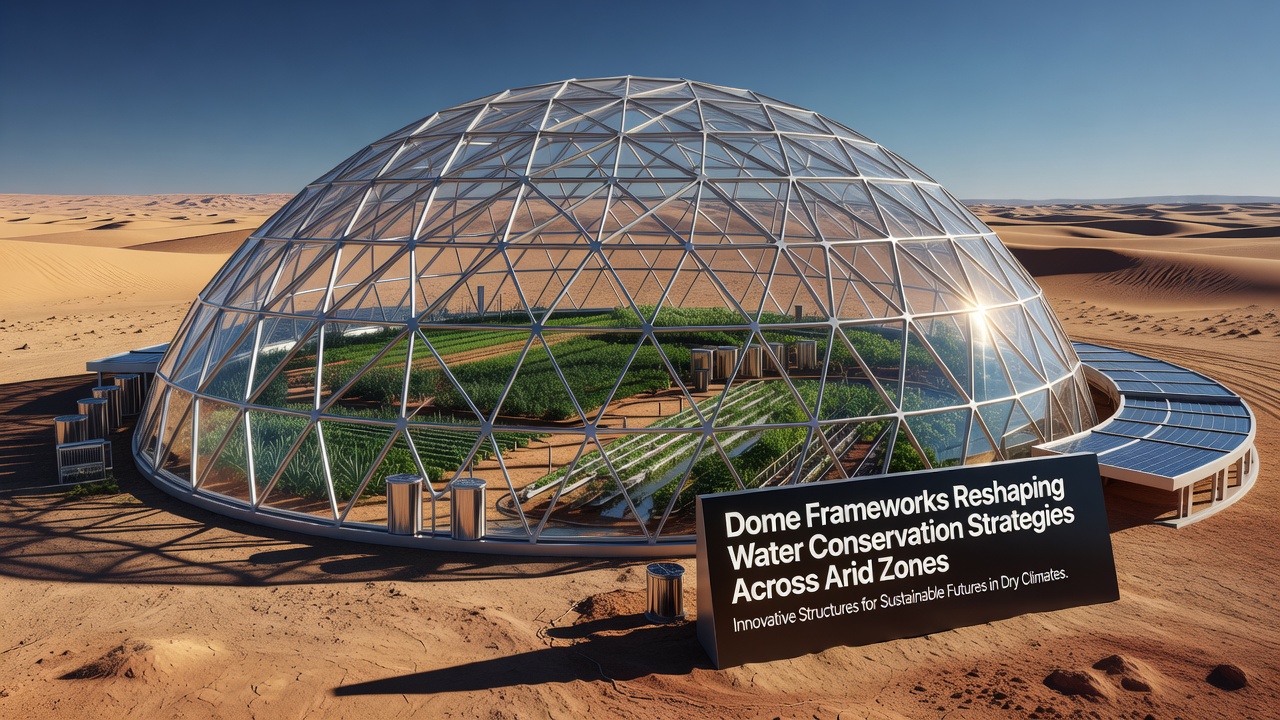
Dome frameworks have gained traction in arid zones because they combine structural efficiency with practical applications for water management, and engineers have deployed them over reservoirs, agricultural plots, and condensation collection points to address evaporation losses that often exceed 50 percent annually in regions with high solar exposure. These frameworks typically use geodesic designs that distribute loads evenly across lightweight materials such as aluminum or composite polymers, allowing large spans without internal supports that might interfere with water surfaces or soil. Research indicates that covering open water bodies with such domes reduces direct sunlight and wind exposure, which in turn lowers evaporation rates according to measurements collected by field teams in the southwestern United States and parts of North Africa. Data from monitoring stations show consistent savings when domes incorporate translucent panels that permit some light while blocking the bulk of ultraviolet radiation.Structural Principles Behind Effective Water Conservation
Engineers select dome shapes because the curved geometry sheds wind and sand more effectively than flat covers, and the same curvature channels condensation toward collection gutters installed along the base perimeter. Materials chosen for these frameworks often include UV-stabilized membranes that resist degradation in temperatures above 40 degrees Celsius, while internal bracing remains minimal to avoid shading issues that could affect any integrated solar still components. Observers note that modular assembly allows teams to erect units quickly in remote locations where heavy equipment access remains limited, and the resulting structures have demonstrated durability through multiple seasonal cycles in places such as the Australian interior and the Atacama Desert.
Applications Across Different Arid Regions
In the Middle East, agricultural cooperatives have integrated dome frameworks with drip irrigation networks to create protected microclimates that extend growing seasons for salt-tolerant crops while capturing nighttime dew that would otherwise dissipate. Australian water authorities have tested similar installations over storage tanks in the Murray-Darling Basin, where reduced evaporation has preserved volumes equivalent to several days of municipal supply during peak summer months. Researchers at institutions in Israel have combined dome covers with atmospheric water generators, and results published through academic channels indicate measurable increases in yield when relative humidity stays above 30 percent for extended periods.
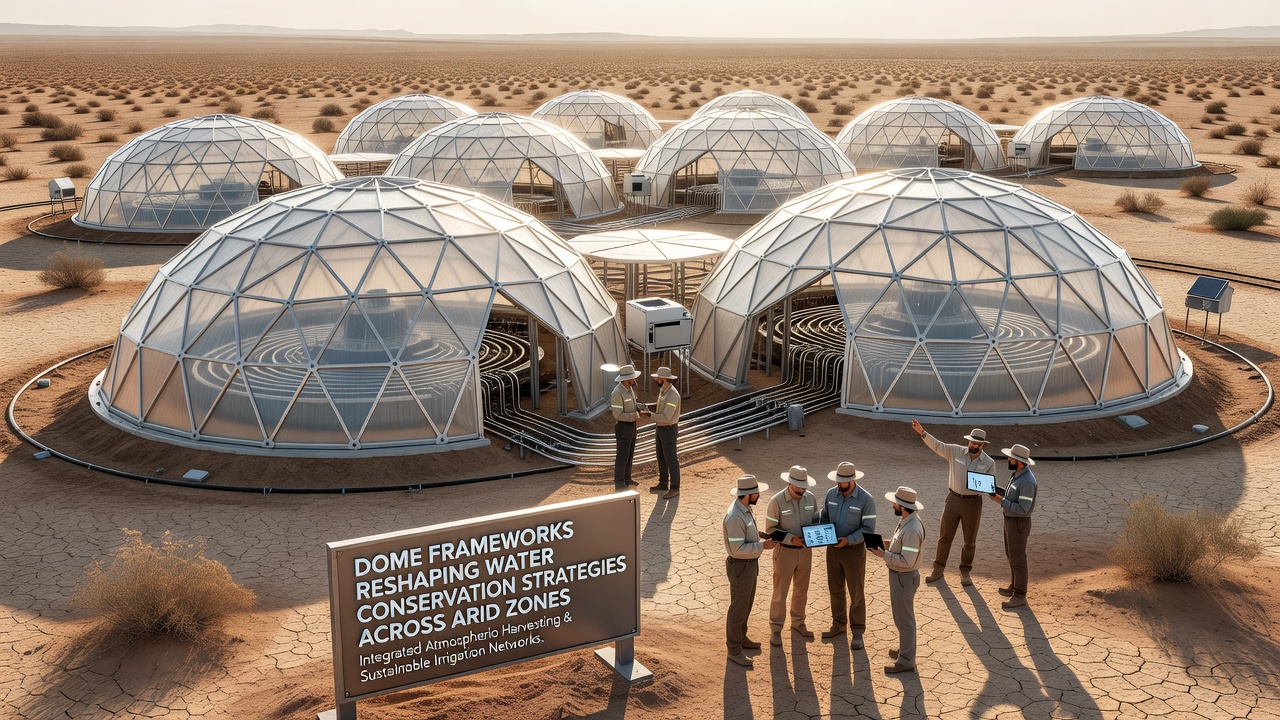
September 2026 brought updated figures from cross-regional monitoring programs that compared dome-covered sites against uncovered controls, revealing average water retention improvements ranging from 25 to 40 percent depending on local wind patterns and temperature extremes. Those datasets also highlighted how dome height and ventilation design influence nighttime radiative cooling, which supports additional condensation without requiring external energy inputs. Government agencies in Canada and the European Union have referenced similar findings when evaluating technology transfer options for drought-prone partner regions, though local adaptations remain necessary to account for variations in soil salinity and dust composition.
Integration With Existing Conservation Infrastructure
Planners often combine dome frameworks with existing canals, retention basins, and wastewater recycling systems because the enclosed environment reduces contamination from airborne particles and limits algal growth that consumes stored water. In one documented case, a cooperative in southern Spain linked multiple dome units to a centralized monitoring network that adjusted ventilation louvers based on real-time humidity readings, and operators reported lower maintenance costs compared with open reservoirs. Data from these installations feed into broader models used by organizations such as the Food and Agriculture Organization when projecting future water demand in expanding arid zones.
Additional studies from Australian research centers have examined how reflective dome surfaces can lower internal temperatures enough to reduce thermal stress on stored water, thereby preserving quality for both irrigation and potable uses. The same projects track sediment accumulation rates, which decrease under covered conditions because wind-driven erosion no longer reaches the water surface directly. These measurements help refine sizing guidelines that balance construction costs against projected volume savings over multi-year periods.
Conclusion
Dome frameworks continue to influence water conservation approaches in arid zones through measurable reductions in evaporation and enhanced collection of atmospheric moisture, with ongoing projects in multiple continents providing comparative data that inform future designs. Regional agencies and academic groups maintain monitoring programs that track performance metrics, and these records support iterative improvements in materials and integration methods. The approach aligns with broader infrastructure planning that prioritizes efficiency in environments where water availability remains constrained by climate and geography.